Login
Your browser does not support the audio element.
In today’s message we talk about God’s assurance which is His unshakeable love for us. We often struggle with life because our eyes are on ourselves and our own opinions. Assurance comes in our understanding of the very nature of God.
This message is part of our series titled: Assurance not Insurance where we study Romans Chapter 8. We are assured of God's love for us but there is also a call that we need to accept. Accepting God's call leads to justification and glorification.
This message is part of our Series titled: Assurance not Insurance, a study in Romans Chapter 8. We can be assured in life when we don't have our facts straight, when we can't prove our worth, when we don't have the right words to say, God still hears us and He still assures us of His love for us.
This is part of our series titled: "Assurance not Insurance" where we study Romans Chapter 8. Suffering is a reality, but we also have the assurance that suffering will end for those who believe.
This is the second message in our series titled: Assurance not Insurance that focusses on Romans 8. This messages encourages us that assurance is in Christ. Assurance lies in the spirit, not in fleshly deeds.
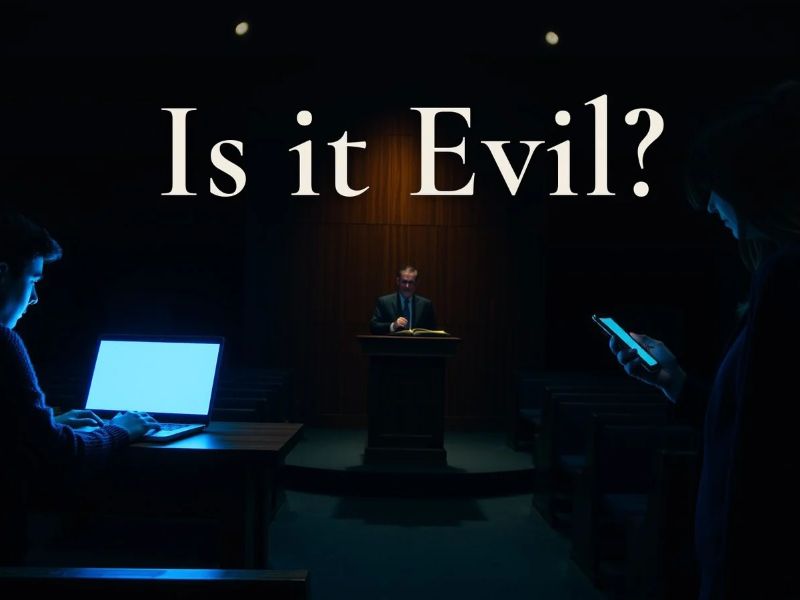
Is artificial intelligence evil? That is the question Pastor Ken took on Sunday — and his answer was not a tech lecture. It was a walk through Matthew 15, where religious leaders confronted Jesus over something that looked scandalous on the surface: his disciples eating bread with unwashed hands. Jesus flipped the argument upside down. It is not what goes into the mouth that defiles a person, but what comes out of the mouth (Matthew 15:11). Mark 7:20-23 says it even more bluntly — evil comes from within, out of the heart.
The scripture is Philippians 4:14-23 — Paul's closing words to a church that had supported him while he sat in prison. On the surface, it sounds like a polite "thanks for the cash." But Paul does something remarkable with it. He borrows the language of a business ledger ("credited to your account," "paid in full," "well supplied") and turns it into a picture of friendship. These believers weren't patrons buying influence, and Paul wasn't a client on the payroll. They were partners in the gospel.